
Understanding Home Inspections: What Buyers Need to Know
Buying a home in the U.S. is probably one of the biggest financial decisions you’ll ever make, and the home inspection is one of the few chances you get to “test drive” the property before you own it. A professional home inspection can reveal hidden issues, help you budget for future repairs, and give you leverage to negotiate with the seller.
In recent years, especially in hot housing markets, some buyers have been tempted to waive their home inspection to make their offers more attractive. That might save a little time up front, but it can cost thousands of dollars later if major problems are discovered after closing.
Current guidance from consumer advocates and real estate pros is clear: a home inspection is still one of the most important steps in the homebuying process in 2024–2025.
This guide explains everything U.S. homebuyers need to know about home inspections: what they cover, when they happen, how to get the most value from them, how to use the inspection report for negotiations, and how technology and climate risks are shaping the future of inspections.
Throughout the article, we’ll use the keyword “home inspection” and related phrases to help you quickly scan and understand each topic while keeping the content optimized for search engines.
What Is a Home Inspection and Why It Matters for Buyers
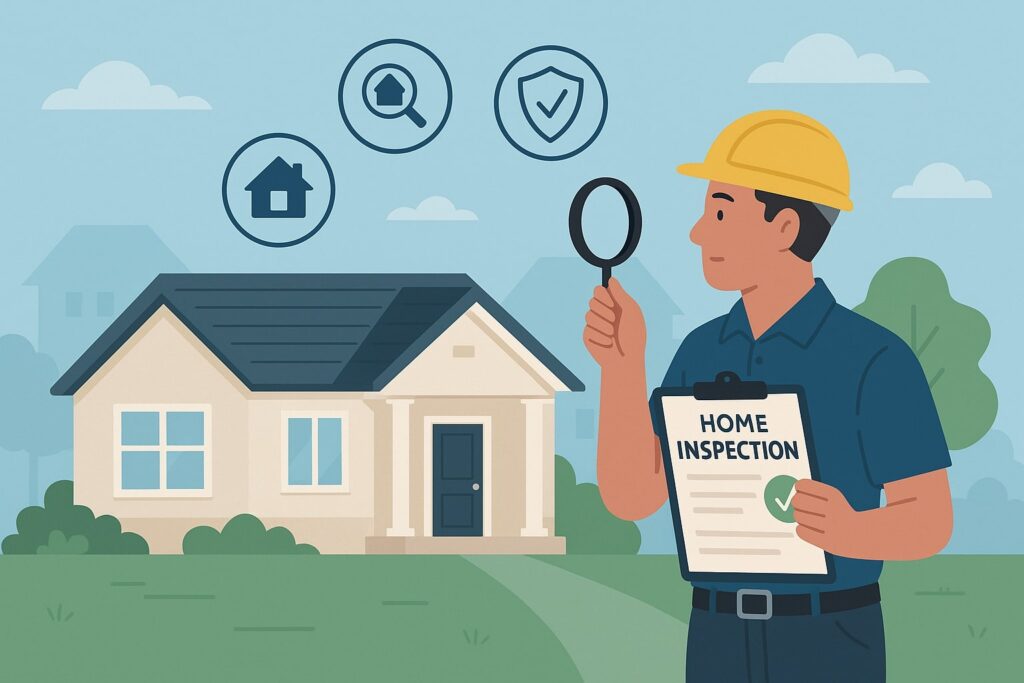
A home inspection is a limited, non-invasive visual examination of a home’s condition, usually performed after your purchase offer is accepted but before closing.
A licensed or certified home inspector examines the structure and major systems – roof, foundation, electrical, plumbing, heating and cooling, and more – then provides a written home inspection report.
The goal of a home inspection is not to guarantee perfection or predict the future. Instead, it documents the home’s condition on the day of the inspection and flags defects, safety concerns, and components nearing the end of their useful life.
That information helps buyers decide whether to move forward, renegotiate, or walk away. A standard home inspection in the U.S. typically takes 2–4 hours on site, plus time for the inspector to prepare the report.
For buyers, the home inspection is a key risk-management tool. You’re about to commit to a 15- or 30-year mortgage, property taxes, homeowners insurance, and maintenance.
Without a home inspection, you might discover after closing that the roof is failing, the foundation is shifting, or the electrical system is unsafe. A few hundred dollars spent on a home inspection can easily save you thousands, or give you the confidence to proceed with a major purchase.
Looking ahead, more lenders, insurers, and even local governments may increasingly rely on home inspection data to assess risk and set pricing—especially as climate-related hazards and aging housing stock become bigger concerns.
That makes it even more important for buyers to understand what a thorough home inspection involves and how to interpret the results.
How a Home Inspection Fits Into the U.S. Homebuying Process
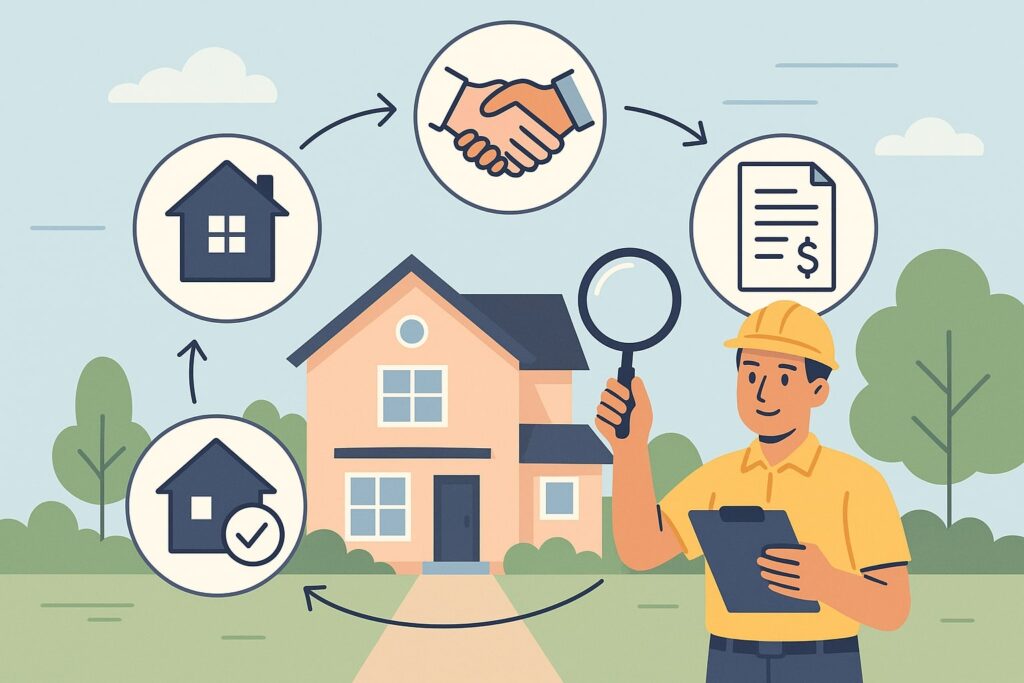
In the United States, the home inspection usually happens after the seller accepts your offer but before you’re fully committed to buy. Most purchase agreements include a home inspection contingency, which gives buyers a set period (often 5–10 days, depending on local custom) to complete a home inspection and either:
- Approve the condition and move forward
- Request repairs or credits
- Cancel the contract based on inspection findings
During this contingency window, the buyer hires the home inspector, pays the fee, and attends the home inspection if possible. The inspector then delivers the home inspection report, which becomes the basis for your next move. Some buyers also order specialized inspections (for termites, radon, sewer lines, etc.) during the same timeframe.
The home inspection typically occurs before or around the same time as the appraisal ordered by your lender. These two events serve different purposes: the home inspection focuses on condition, while the appraisal focuses on value.
Lenders usually don’t require a general home inspection, but they do require an appraisal to ensure the property is worth the loan amount.
Because closing timelines can be tight, your real estate agent may suggest a preferred inspector and help coordinate scheduling. However, you as the buyer are the inspector’s client, and you have the right to choose your own home inspection company.
In the future, we’re likely to see more contracts with very short contingency periods and even “pre-offer” inspections in competitive areas, where buyers perform a home inspection before submitting an offer to avoid waiving contingencies.
Home Inspection vs. Appraisal vs. Seller Disclosure
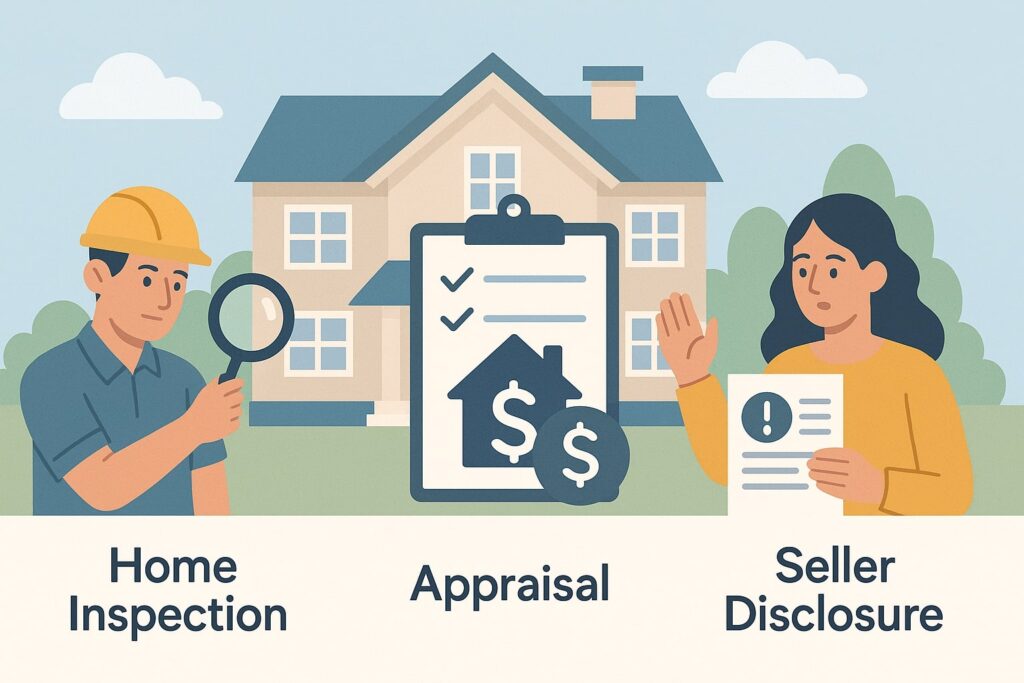
Many first-time buyers confuse a home inspection with an appraisal or seller disclosure, but each serves a distinct role in a real estate transaction. Understanding the differences can prevent dangerous assumptions.
- Home inspection – Hired and paid for by the buyer, focuses on the physical condition of the home. The inspector documents defects, safety issues, and maintenance needs. The home inspection report is primarily for the buyer’s benefit.
- Appraisal – Ordered by the lender, focuses on market value, not condition beyond what affects value. A licensed appraiser compares the home to similar recent sales to confirm the property is worth at least the loan amount.
- Seller disclosure – A legal form where the seller lists known defects or issues, required in most U.S. states (with varying rules). The seller isn’t required to find every problem—only to disclose what they know.
A home inspection often uncovers issues that are not listed in seller disclosures, because sellers simply may not know about them or may underestimate their seriousness. Similarly, an appraisal may briefly note “average condition” but won’t provide the detailed defect list you get from a home inspection.
Going forward, as digital forms and property data become more standardized, buyers may see more integration of seller disclosures, inspection reports, and appraisal data into a single digital property record. But even with more data, you’ll still need a detailed, independent home inspection to truly understand the property’s condition.
What Inspectors Look For: Systems and Structures Explained
A general home inspection covers the visible and accessible parts of the home on the day of the visit. The inspector doesn’t tear open walls or move heavy furniture, and they don’t normally test every outlet or every component.
Instead, they follow a standard of practice—often based on trade groups such as ASHI (American Society of Home Inspectors) or InterNACHI—which outlines what must be inspected and what’s excluded.
Most home inspectors evaluate the home’s structure, exterior, roofing, interior spaces, plumbing system, electrical system, HVAC (heating, ventilation, and air conditioning), and certain built-in appliances.
Many also note grading and drainage issues, visible signs of wood-destroying organisms, and obvious safety hazards such as missing handrails or unprotected outlets.
It’s important to realize that a home inspection is not a code compliance inspection and does not predict how long every component will last. Instead, it flags visible defects and recommends further evaluation when needed.
As building technology evolves—such as smart thermostats, solar panels, EV chargers, and advanced insulation—home inspections are also expanding to address these modern systems, though they may sometimes recommend specialist evaluations.
Exterior, Roof, Foundation, and Drainage
The exterior and structure are some of the most critical parts of a home inspection because structural problems and water intrusion can be extremely costly to fix. An experienced inspector will walk the property, visually evaluate the foundation, and assess how water flows around the home.
Common exterior and structural checks during a home inspection include:
- Foundation and grading – Signs of settlement, cracks, bowing walls, standing water near the foundation, or improper grading that slopes toward the house.
- Roof – Age and condition of shingles, tiles, or metal; missing or damaged materials; flashing around chimneys and vents; condition of gutters and downspouts.
- Siding and trim – Rotting wood, damaged siding, failing paint or caulking, gaps where pests or water can enter, and loose or missing trim.
- Driveways, walkways, and decks – Trip hazards, loose railings, deteriorated wood, improper footing, or attachment issues that could affect safety.
If your home inspection reveals major foundation movement or a severely worn roof, expect your inspector to recommend further evaluation by a structural engineer or roofing specialist.
These exterior findings often become major negotiation points because they directly affect the home’s longevity and insurance risks. In the future, more inspectors may use drones to inspect steep or complex roofs and digital moisture meters to detect hidden water issues in exterior walls.
Interior, Electrical, Plumbing, and HVAC
Inside the home, the inspector focuses on safety and function. A detailed home inspection will note whether doors and windows open and close properly, whether outlets and fixtures appear safe, and whether the major systems are working at the time of inspection.
Key interior and system items your home inspector typically reviews include:
- Interior rooms – Walls, ceilings, floors, visible cracks or stains, signs of water damage, condition of windows, and the presence of smoke and carbon monoxide detectors.
- Electrical system – Main panel type and capacity, visible wiring conditions, use of GFCI/AFCI protection where required, improperly wired outlets, and obvious safety hazards such as double-tapped breakers or exposed wiring.
- Plumbing – Visible supply lines and drain pipes, functioning of toilets and fixtures, water pressure, water heater age and installation, and leaks under sinks.
- HVAC – Type and age of heating and cooling equipment, condition of ductwork, thermostat operation, filter access, and visible safety issues like improper venting of combustion appliances.
A home inspection will not typically guarantee that every outlet is properly wired or that every plumbing line is perfect, but it will flag visible safety risks and components that appear to be at the end of their useful lives.
As more homes add smart devices, heat pumps, and high-efficiency systems, inspectors may increasingly use specialized tools and software to test performance and energy efficiency, giving buyers better insight into long-term operating costs.
Environmental and Safety Concerns (Radon, Mold, Lead, Asbestos)
Standard home inspections generally do not include testing for environmental hazards such as radon, mold, lead-based paint, or asbestos, although inspectors often note visible signs that might warrant further testing.
Many buyers in the U.S. now order at least radon testing in higher-risk regions, along with mold or sewer scope inspections where moisture problems are common.
Here are some key environmental and safety concerns related to home inspections:
- Radon – A naturally occurring radioactive gas that can enter homes through foundations; long-term exposure is linked to lung cancer. Many home inspection companies offer radon testing as an add-on, especially in the Midwest and Northeast.
- Mold and moisture – Inspectors look for stains, musty odors, and visible microbial growth, but full mold testing usually requires a specialist. Chronic moisture issues can indicate hidden damage or ventilation problems.
- Lead-based paint – Common in homes built before 1978. A home inspection will note peeling paint and safety issues; specific lead testing is typically separate. Families with young children often consider this seriously.
- Asbestos – Older insulation, flooring, and siding can contain asbestos. Inspectors might flag materials that appear suspect, but laboratory testing is needed to confirm.
Over the next decade, buyers can expect environmental concerns to be more formally integrated into the home inspection process.
As consumer awareness rises and regulations tighten, many inspectors are adding certified radon testing, indoor air quality evaluations, and energy audits as standard or optional services in their home inspection packages.
The Home Inspection Timeline: From Offer to Closing Day
Understanding the timeline helps you get the most from your home inspection and avoid missing important deadlines. In a typical U.S. real estate transaction, the clock starts ticking the moment your purchase offer is accepted.
Many contracts specify that you must schedule and complete your home inspection within a certain number of business days.
During this window, your main tasks are to hire a qualified inspector, attend the inspection if possible, review the home inspection report, and decide what to do with the findings. Meanwhile, your lender is moving forward with the appraisal and underwriting, and your agent is coordinating title work and other contingencies.
Missing your inspection contingency deadline can weaken your negotiating position or even lock you into buying a home with serious defects. That’s why most real estate professionals strongly recommend scheduling the home inspection as soon as possible after your offer is accepted, especially in fast-moving markets.
Scheduling and Preparing for the Home Inspection
As soon as your offer is accepted, you should start calling or researching home inspectors. Look for inspectors who are licensed where required, carry errors and omissions (E&O) insurance, and follow a recognized standard of practice.
Professional associations like ASHI and InterNACHI offer “find an inspector” tools and minimum education requirements.
When scheduling, ask:
- How soon can they perform the home inspection?
- How long will the inspection take?
- What is included (and excluded) in the home inspection?
- Will they provide digital photos and a written report?
- Do they offer add-on tests like radon, termite, or sewer scope?
Before the inspection, coordinate with your agent and the seller so utilities are on and all areas are accessible: attic, basement, electrical panel, crawlspaces, and mechanical rooms. As the buyer, bring:
- A notepad or digital device for questions
- The seller’s disclosure, so you can ask about any contradictions
- A tape measure or phone app if you want to measure rooms while you’re there
Going forward, more scheduling and preparation may happen through integrated real estate platforms. You’ll likely be able to select a home inspection time, pay, and sign the inspection agreement entirely online, and then receive automated reminders and digital access to reports and photos.
Walking the Property With Your Home Inspector
Whenever possible, you should attend the home inspection. Consumer advocates emphasize that spending a few hours with your inspector is one of the most valuable steps in the entire purchase process.
During the walk-through, a good inspector will:
- Explain how major systems work (HVAC, water shutoff, electrical panel)
- Point out defects and put them into context (urgent vs. cosmetic)
- Show you where key safety features are (smoke detectors, CO detectors, GFCI outlets)
- Answer questions about maintenance, useful life, and potential repair options
You don’t have to follow the inspector into every attic or crawlspace, but stay nearby, listen carefully, and ask questions. The home inspection is your opportunity to learn how to operate and maintain your future home.
Inspectors generally won’t give on-the-spot repair cost estimates, but they may indicate when an issue is likely to be expensive (like foundation movement or a failing roof) versus something more manageable (like a loose outlet cover).
Over time, we’re likely to see more inspectors using tablets and on-site software so they can show you real-time photos, diagrams, and even preliminary cost ranges pulled from databases during the home inspection.
After the Inspection: Reports, Re-Inspections, and Deadlines
Within a day or two after the site visit, you should receive your home inspection report. Modern reports are usually digital and include:
- A summary of major issues
- Detailed notes for each system
- Photos, diagrams, and sometimes short videos
- Recommendations for repairs or further evaluation
Read the entire home inspection report carefully, then discuss it with your real estate agent. Together, you’ll decide what issues to raise with the seller.
You might request that the seller complete repairs, offer a credit toward closing costs, or reduce the purchase price. In some cases, particularly when major defects are discovered, you may choose to terminate the contract under your inspection contingency.
If the seller agrees to repairs, consider a re-inspection shortly before closing to confirm that work was done properly. Some inspectors offer discounted re-inspections for this purpose. Keep an eye on your contract deadlines; inspection-related negotiations almost always must be completed by a specific date.
In the future, expect more seamless digital experiences, where your home inspection report, repair addendum, and re-inspection documentation are integrated into your transaction portal—making it easier to track progress, compare estimates, and store records for future reference.
Using Your Home Inspection Report to Negotiate Smartly
A home inspection can dramatically shift the balance of negotiations. Instead of bargaining based on cosmetic preferences, you can negotiate based on documented defects and safety issues. That’s a powerful advantage when you’re investing hundreds of thousands of dollars.
Your approach should be strategic, not emotional. The purpose of a home inspection isn’t to demand a perfect house; it’s to understand what you’re buying.
Every home, including new construction, has issues. The key is deciding which items are acceptable, which merit negotiation, and which are serious enough to walk away from.
Differentiating Cosmetic Issues from Major Defects
When you receive your home inspection report, start by categorizing items into three buckets:
- Safety and structural issues – Electrical hazards, gas leaks, active roof leaks, serious foundation movement, missing handrails on high stairs, non-functioning smoke detectors, etc.
- Significant functional defects – Failing HVAC units, major plumbing leaks, non-operational appliances included in the sale, damaged windows that won’t open or close, etc.
- Cosmetic or minor issues – Peeling paint, small cracks in drywall, loose door handles, worn carpet, or outdated fixtures.
It’s generally reasonable to focus negotiation on categories 1 and 2. Category 3 items are usually considered “normal wear and tear” and not the primary purpose of a home inspection. In a competitive market, buyers often accept more cosmetic issues to keep the deal moving.
Going forward, as digital home inspection reports become more standardized, we may see automated summaries that assign severity ratings to each defect, helping buyers quickly see which items are critical and which are minor. However, even with better tools, your agent’s local knowledge and your own risk tolerance will remain important.
Repair Requests, Credits, and Price Reductions
Once you’ve identified the most important home inspection findings, you and your agent will decide how to respond. Common options include:
- Requesting repairs – Asking the seller to fix specific defects before closing, often by licensed professionals with receipts provided.
- Requesting a credit – Asking the seller to contribute money at closing (for example, via a seller credit toward closing costs) so you can handle the repairs after you move in.
- Requesting a price reduction – Asking to reduce the purchase price to reflect the cost of addressing major defects discovered by the home inspection.
Each strategy has pros and cons. Repairs arranged by the seller can be convenient, but you have less control over contractors and materials. Credits and price reductions give you more control but require time and coordination after closing.
NerdWallet and other consumer resources note that many buyers prefer credits or price reductions so they can ensure repairs are done to their standards.
In the future, we may see more “repair negotiation tools” integrated into real estate platforms, where buyers can attach specific pages of the home inspection report, estimated repair costs, and preferred resolutions, then digitally track the seller’s responses and agreed scope of work.
When to Walk Away After a Home Inspection
Sometimes, a home inspection reveals problems that are so serious or expensive that walking away is the wisest financial choice. Examples might include:
- Widespread structural damage or major foundation movement
- Extensive water intrusion or mold requiring large-scale remediation
- Very old, failing mechanical systems combined with a failing roof and major electrical issues
- Evidence of unpermitted, unsafe renovations throughout the home
If the seller refuses to address these issues meaningfully, or if the estimated repair costs would stretch your budget to the breaking point, your inspection contingency gives you the right to cancel (subject to contract terms). That’s exactly why the home inspection exists—to help buyers avoid disastrous purchases.
In coming years, as repair costs rise and climate risks increase, buyers may become even more cautious about “project houses” with major hidden defects. Your home inspection, combined with repair estimates and insurance quotes, will play a central role in deciding whether the home truly fits your financial and lifestyle goals.
Costs, Add-On Inspections, and Legal Considerations
In most U.S. markets, a standard home inspection costs roughly $300–$600 or more, depending on the home’s size, age, and complexity. Larger or older homes, or properties with multiple units, typically cost more because they take longer to inspect.
While this fee is not trivial, it’s a small percentage of the purchase price and can easily pay for itself by revealing issues that allow you to negotiate thousands of dollars in concessions.
In addition, buyers frequently choose add-on inspections—such as radon, termite, sewer scope, pool and spa, chimney, or septic inspections—especially in regions where certain problems are common.
From a legal standpoint, many U.S. states regulate home inspectors through licensing boards that set education, exam, and continuing education requirements. However, regulation levels vary widely by state; in some areas, the profession is still lightly regulated. Buyers should always verify an inspector’s credentials and insurance coverage.
Typical Home Inspection Costs and What Influences Price
Several factors influence how much you’ll pay for a home inspection:
- Square footage and configuration – Larger homes, multi-story homes, or properties with additional structures (detached garages, guest houses) cost more.
- Age and condition – Older homes or properties with visible complexity (e.g., lots of additions or unusual systems) tend to require more time and carry higher fees.
- Location and demand – Prices in high-cost, high-demand markets are usually higher than in rural areas.
- Scope of services – Inspectors who include thermal imaging, drones for roofs, or digital reporting may charge more.
Many inspectors offer bundled pricing for home inspections plus radon, termite, or other add-ons, which can save money compared to ordering each separately. Rocket Mortgage and other housing resources emphasize budgeting for the home inspection early so you’re not tempted to skip it under financial pressure.
As technology and labor costs rise, expect inspection fees to increase gradually. However, the value of a detailed home inspection will likely grow as well, especially as reports become richer in data, photos, and predictive insights.
Specialized Inspections: Termites, Sewer Scope, Chimneys, and More
A general home inspection is broad but not exhaustive. Depending on the home’s age, location, and visible issues, your inspector or agent may recommend specialized inspections, including:
- Termite/WDI (wood-destroying insects) – Essential in many parts of the U.S. where termites and carpenter ants are common. Some lenders or insurers may require it.
- Sewer scope – A camera inspection of the main sewer line from the house to the street. Especially valuable for older homes with clay or cast-iron pipes or lots of big trees.
- Chimney inspection – A level 2 chimney inspection can reveal hidden defects, creosote buildup, or damaged liners in fireplaces or wood stoves.
- Septic inspection – Critical for homes not connected to municipal sewer systems, to check tank condition, drainage fields, and overall system performance.
- Pool and spa inspection – Evaluates structure, pumps, filters, safety features, and electrical bonding.
In the future, as more homes add solar panels, battery storage, and EV charging, expect to see specialized solar inspections and electrical capacity assessments treated similarly—either as part of a premium home inspection package or as separate specialist evaluations.
State Licensing, Standards of Practice, and Inspectors’ Liability
Home inspection laws vary by state, but many require inspectors to hold a license, complete approved training, pass an exam, and carry professional liability insurance. Associations like ASHI provide a Standards of Practice document that outlines what inspectors must inspect and what is excluded from a general home inspection.
Most inspectors require you to sign an inspection agreement that:
- Defines the scope and limits of the home inspection
- Specifies what systems are included or excluded
- Limits the inspector’s liability, often to the amount of the inspection fee
- Describes how disputes or claims will be handled
NerdWallet and other consumer finance sources warn that home inspection contracts often include strong liability limitations, which means you should not assume the inspector will pay for any missed defects.
Going forward, tighter regulation and standardized contracts may improve consumer protection, but buyers should still carefully read the inspection agreement and understand that a home inspection reduces risk—it doesn’t eliminate it.
Future Trends in Home Inspections: Tech, Climate, and Buyer Expectations
The home inspection industry is evolving quickly as technology advances and climate risks reshape what buyers care about. In 2024–2025 and beyond, you can expect home inspections to become more data-driven, more visual, and more focused on long-term resilience and operating costs, not just immediate defects.
From drone roof inspections to AI-powered report summaries, these trends are already emerging in U.S. markets. Buyers who understand them will be better prepared to evaluate inspectors and interpret their home inspection results.
Tech-Enabled Home Inspections: Drones, Thermal Imaging, and AI
Many inspectors now use advanced tools to enhance their home inspection services:
- Drones – Help inspect steep or high roofs safely and capture detailed photos.
- Thermal imaging cameras – Reveal temperature differences that may indicate missing insulation, moisture problems, or electrical hotspots.
- Moisture meters – Detect elevated moisture inside walls or floors that might not be visible yet.
- On-site software and cloud reports – Allow inspectors to add photos, arrows, and comments in real time, then deliver digital reports quickly.
As AI tools improve, we may see home inspection software that:
- Automatically categorizes defects by severity
- Suggests approximate repair ranges based on local cost databases
- Flags potential building code issues based on age and location
- Integrates with listing platforms, insurance quoting tools, and maintenance apps
These innovations won’t replace the human judgment of a skilled inspector, but they’ll make home inspections more accurate, consistent, and accessible for buyers.
Climate Risks, Insurance, and Resilient Home Features
Climate-related risks are becoming a central theme in U.S. real estate, especially in coastal, wildfire-prone, and flood-prone areas. While a general home inspection is not the same as a climate risk assessment, many inspectors now highlight issues that relate to resilience and insurability, including:
- Drainage and grading problems that increase flood risk
- Roof age, roof material, and wind resistance
- Presence (or absence) of fire-resistant materials and defensible space in wildfire zones
- Condition of sump pumps, backflow valves, and other protective systems
Insurance costs and availability can be heavily influenced by these factors. Some buyers now pair a home inspection with a separate climate or insurance risk report before committing to a property.
Over the next decade, it’s likely that climate resilience features—like impact-rated windows, elevated mechanical systems, and upgraded roofing—will appear more prominently in home inspection reports and listing descriptions.
How Home Inspections May Evolve Over the Next Decade
Looking ahead, the typical U.S. home inspection may shift from a static, one-time snapshot to an evolving property health record that follows the home across multiple sales. Future trends may include:
- Digital home passports – Long-term records combining past home inspections, permits, major repairs, and upgrades.
- Subscription-based maintenance inspections – Annual or biannual mini-inspections that help homeowners stay ahead of problems and provide historical data to future buyers.
- Energy and carbon reporting – More emphasis on insulation levels, HVAC efficiency, and overall energy performance as regulations and incentives evolve.
- Standardized defect coding – More consistent terminology for defects, making it easier for buyers, contractors, and insurers to communicate and compare homes.
For buyers, the bottom line will remain the same: you need a thorough, unbiased home inspection to make confident decisions. But the tools, data, and expectations around a “good” home inspection will only get more sophisticated.
Frequently Asked Questions
Q.1: Do I really need a home inspection if the house looks great?
Answer: Yes—absolutely. A home can look freshly painted and “move-in ready” while hiding serious defects in the foundation, roof, electrical system, or plumbing. A professional home inspection evaluates areas you can’t easily assess during a quick showing, such as the attic, crawlspace, and major mechanical systems.
Many serious issues, like early-stage roof leaks or overloaded electrical panels, are not obvious to the untrained eye. Skipping a home inspection is essentially agreeing to buy the home “as-is” with limited knowledge.
In hot markets, some buyers consider waiving contingencies to win bidding wars, but experts consistently warn that waiving the home inspection can be extremely risky financially.
Q.2: Can I use the inspection report to get a lower price?
Answer: Often, yes. While a seller isn’t required to agree to repairs or price reductions, your home inspection report provides objective documentation of defects. Many buyers successfully negotiate:
- Repairs to safety-critical issues
- Credits toward closing costs
- Reductions in the purchase price
However, your leverage will depend on market conditions, the severity of the issues, the seller’s motivation, and your contract terms. In a seller’s market, you might focus on essential safety and structural issues. In a buyer’s market, you may have more room to negotiate cosmetic and moderate items as well.
Q.3: Should I attend the home inspection?
Answer: Yes, if at all possible. Attending the home inspection gives you the chance to see issues firsthand and ask questions while the inspector is on site. Consumer Reports and other independent sources strongly recommend that buyers attend at least part of the inspection to get the maximum educational value.
If you can’t attend, ask your inspector to provide plenty of photos and be available for a phone or video call afterward to walk through the report. But nothing beats seeing the home during the home inspection and hearing the inspector’s explanations in real time.
Q.4: What if the inspection reveals a long list of issues?
Answer: Almost every home inspection report is long. That doesn’t necessarily mean the house is a bad purchase. Inspectors document both minor and major issues, and even new homes generate lengthy reports. The key is to focus on:
- Health and safety problems
- Structural concerns
- Major systems nearing end-of-life
Work with your agent to decide which items are must-fix, which are negotiation points, and which are simply part of normal homeownership. In some cases, a long list combined with high repair estimates may justify walking away. In others, a detailed report simply helps you plan future maintenance after closing.
Q.5: Are new construction homes exempt from needing a home inspection?
Answer: No. New construction homes can have defects too—rushed workmanship, missing insulation, improper grading, incorrectly wired outlets, or HVAC problems.
A third-party home inspection for new construction can catch issues before you move in and while the builder is still contractually obligated to fix them. Many buyers also schedule a 11-month warranty inspection near the end of the builder’s warranty period to identify issues that developed during the first year of occupancy.
As building codes and materials become more complex, independent home inspections on new construction will likely become even more important, not less.
Q.6: How long does a home inspection report remain “valid”?
Answer: A home inspection reflects the condition of the home on the date of the inspection. Systems can fail later, roofs can begin leaking, or damage can occur after severe weather. Most professionals view a report as a useful snapshot for weeks or a few months at most, but not as a long-term guarantee.
If a significant amount of time passes between your home inspection and closing—or if a major storm or event occurs—consider a brief re-check or walk-through with your inspector or contractor. In the future, as subscription-style maintenance inspections become more common, we may see more continuous updates rather than one-off reports.
Conclusion
A home inspection is more than a checklist—it’s a decision-making tool that can make or break your largest investment. By understanding what a home inspection covers, where its limits lie, and how to interpret the report, you put yourself in a stronger position as a buyer in the U.S.
Here are the key takeaways:
- A home inspection is your best defense against expensive surprises and unsafe conditions.
- It fits into a defined window in the purchase contract; missing deadlines can reduce your options.
- The report should guide your negotiations, helping you focus on safety, structure, and major systems rather than purely cosmetic flaws.
- Add-on inspections for termites, radon, sewer lines, chimneys, and more can be critical depending on the property and location.
- Licensing, standards of practice, and inspector liability vary by state, so always verify credentials and read agreements carefully.
- Technology, climate risks, and consumer expectations are pushing the home inspection industry toward richer data, better tools, and more emphasis on resilience and energy efficiency.
As you move through the homebuying process, treat the home inspection as a central, non-negotiable step. Hire a qualified inspector, attend the home inspection, ask questions, and use the report to make informed, confident decisions.
When used wisely, your home inspection can turn uncertainty into clarity—and help ensure that the house you fall in love with is also a solid, safe, and financially sound home for years to come.