
Best Home Improvements to Boost Sale Price
Selling a home is rarely about doing more work. It’s about doing the right home improvements—upgrades that buyers notice in the first 30 seconds, improvements that show up in inspection, and changes that make your listing photos feel “newer” than competing homes.
The best home improvements to boost sale price usually fall into three buckets: curb appeal that increases perceived value, functional upgrades that reduce buyer objections, and energy/comfort improvements that justify a higher offer.
In today’s market, buyers are cost-conscious and detail-aware. They compare homes online, zoom into photos, read disclosures, and calculate what repairs will cost after closing.
That’s why smart home improvements focus on “move-in ready” signals—fresh paint, updated fixtures, modern lighting, clean landscaping, and a home that feels maintained. Big remodels can still work, but only when they match the neighborhood and solve a real buyer problem.
Data-backed reports consistently show exterior improvements can deliver exceptionally strong returns because they’re relatively affordable while dramatically improving first impressions—think garage door replacement and entry door replacement, which rank among top ROI projects in recent industry reporting.
This guide walks through the best home improvements to boost sale price, how to prioritize them by budget and timeline, what to avoid, and what’s likely to come next so you can invest with confidence.
Start With Strategy: How to Choose Home Improvements That Actually Raise Value
Before you buy a single tile or light fixture, the best way to boost sale price is to match your home improvements to how buyers shop. Most buyers compare homes at a glance—photos, layout, condition, and the “does it need work?” feeling.
That means the best home improvements are often the least glamorous: repairs, paint, lighting, flooring refresh, curb appeal, and selective updates that make the home feel consistent.
A practical approach is to rank projects using three filters:
- Buyer visibility: Will a buyer instantly see it in photos or during a walkthrough?
- Objection removal: Does it eliminate a reason to negotiate down (old roof, leaks, dated electrical, musty smell, worn carpet)?
- Cost recovery potential: Is there evidence it’s a high-ROI category (especially exterior and “first impression” projects)?
Industry sources that track resale recovery regularly place exterior upgrades at the top because they improve curb appeal and perceived maintenance with less disruption than major interior remodels. Garage door replacement, entry door replacement, and other curb-facing upgrades appear in top ROI discussions in recent reports.
Also, keep the “neighborhood ceiling” in mind. If nearby homes sell with laminate countertops and modest baths, an ultra-luxury kitchen can become an over-improvement. The best home improvements to boost sale price are the ones that make your home the cleanest, freshest, most functional option in its price range—without pushing it into a bracket buyers won’t pay for.
Finally, plan your improvements around time: projects that require permits, specialty trades, or long lead times can backfire if your listing date is close. For a faster sale, prioritize visible improvements that can be completed quickly with predictable results.
Curb Appeal Upgrades With the Highest Perceived Value

Curb appeal is one of the best levers to boost sale price because it influences how buyers interpret everything else. If the exterior looks fresh, buyers assume the home is maintained. If it looks tired, they start mentally subtracting money before they even step inside. The best home improvements for curb appeal are simple, photo-friendly, and consistent.
High-impact curb appeal improvements include: cleaning and painting the front door, updating house numbers, refreshing exterior lighting, trimming landscaping, mulching beds, pressure washing walkways, and replacing worn mailboxes or railings. These aren’t “big remodel” projects—but they create a premium feel.
When you want a more dramatic upgrade, exterior replacements often show strong cost recovery in industry tracking. Garage door replacement, for example, is frequently highlighted as a top ROI improvement in resale-focused lists based on the Cost vs. Value-style reporting.
Curb appeal also reduces time on market. Buyers decide quickly whether a home feels “worth it,” and strong exterior presentation increases showing volume and improves offer confidence. If two homes are similar in size and location, the one with better curb appeal often gets the stronger first offer because buyers fear competition.
Future prediction: Expect curb appeal to lean even more toward “low-maintenance modern.” Clean lines, simple planting design, drought-tolerant landscaping concepts, and modern exterior lighting will keep gaining traction as buyers prioritize convenience and operating cost clarity.
Upgrade the Garage Door for a High-ROI Exterior Reset
A garage door is a massive visual surface. Replacing it modernizes the entire façade in one move—especially when paired with updated exterior lighting and fresh trim paint. Many ROI roundups call out garage door replacement as a standout project because it’s visible, relatively quick, and signals a well-maintained property.
To maximize value, choose a design that matches the home’s style (modern, traditional, carriage-house). Avoid ultra-trendy colors that may polarize buyers. Insulated doors can also reduce noise and improve comfort if the garage shares walls with living space—something buyers notice during showings.
From a buyer psychology standpoint, a new garage door reduces “unknowns.” Buyers think: if the seller replaced the garage door, what else did they maintain? That confidence can translate into fewer repair requests and a stronger offer.
If replacement isn’t in the budget, a deep clean, hardware refresh, and professional repaint can still boost sale price. But if your door is dented, noisy, or visibly aged, replacement is often one of the best home improvements to boost sale price because the visual payoff is immediate.
Replace or Refresh the Entry Door to Increase “Welcome” Value
The front door is the handshake of the home. A worn entry door, outdated hardware, or weak lighting makes the entire property feel older. Entry door replacement (or even refinishing and hardware upgrades) is frequently listed among strong ROI improvements because it’s affordable compared to full exterior renovations and it upgrades buyer perception instantly.
Focus on three elements: the door finish, the handle/lockset, and the lighting. A modern handle set, clean matte finishes, and bright, warm exterior lighting make evening showings feel safer and more premium. Weatherstripping and proper alignment matter too—buyers notice sticking doors and drafts.
If security is a concern, smart locks are increasingly popular, but keep them simple. Buyers like convenience, yet they don’t want complex systems they must troubleshoot after moving in. A straightforward smart deadbolt or a high-quality keyed lock communicates security without friction.
Future prediction: Expect more demand for doors with better insulation and sealing as buyers become more energy-cost aware. “Comfort upgrades” at the entry point will increasingly be perceived as value upgrades.
Paint and Finishes: The Fastest Home Improvement to Boost Sale Price
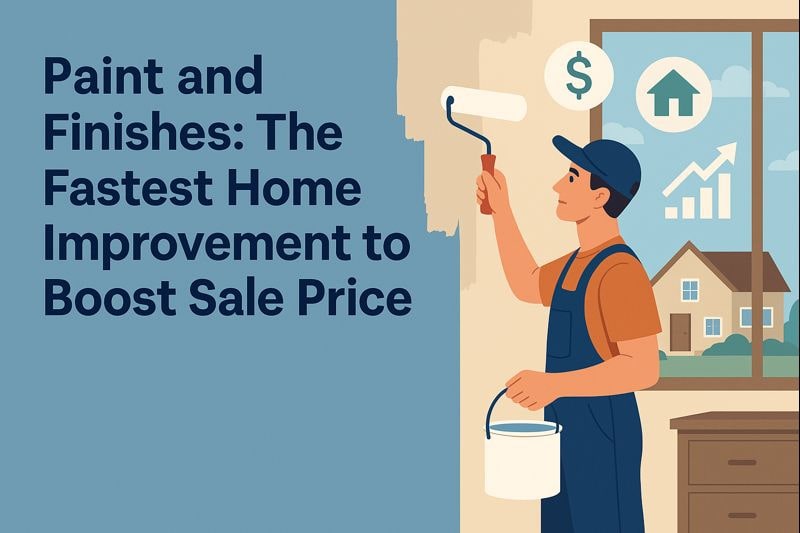
If you only do one category of home improvements before selling, make it paint and surface consistency. Fresh, neutral paint is one of the best home improvements to boost sale price because it makes a home feel clean, bright, and updated—while helping buyers imagine their own furniture in the space.
The key is to choose tones that read well in photos and under different lighting. Soft whites, warm off-whites, and light greige tones tend to perform well because they reduce visual noise and make rooms feel larger. Avoid highly saturated colors, bold accent walls, and overly trendy palettes that can narrow your buyer pool.
Paint is also a “problem solver.” It can reduce the appearance of minor wall flaws, cover scuffs, unify mismatched additions, and remove odors from pets or cooking when paired with proper cleaning and priming.
Don’t skip prep: patch holes, sand rough areas, and use stain-blocking primer where needed. Buyers will run their eyes along walls during showings—bad prep looks like neglect.
Also consider updating finishes for consistency: dated brass knobs, mismatched faucets, or worn outlet covers can make a newly painted home still feel old. Small finish upgrades—cohesive hardware, updated switch plates, modern cabinet pulls—create a “renovated” look without a major remodel.
Future prediction: Expect continued demand for natural textures and warm minimalism—clean walls, subtle contrast, and layered lighting—rather than stark, sterile white rooms. Some listing analyses have highlighted buyer interest in natural materials and warm, modern styling cues.
Choose Neutral Colors That Photograph Well and Feel Current
Neutral doesn’t mean boring. It means broadly appealing. The best paint colors create a consistent flow from room to room and reduce the feeling of “projects.” Your goal is to let buyers focus on space, light, and layout—not on your personal taste.
Start with a consistent wall color across the main living areas. Use a slightly brighter white for trim to create crisp edges. If ceilings are stained or heavily textured, repainting them can dramatically increase the perceived height and cleanliness of a room.
Don’t forget exterior paint touch-ups. Peeling trim, faded shutters, or chalky siding kills curb appeal faster than most sellers realize. If a full exterior repaint isn’t possible, focus on high-visibility areas: front-facing trim, porch railings, and the entry surround.
This is one of the most affordable home improvements to boost sale price because it improves listing photos, showing experience, and buyer confidence all at once.
Refresh Hardware and Small Finishes for a “Cohesive” Look
Buyers read hardware like signals. Mismatched finishes suggest piecemeal updates and unknown quality. Matching hardware across doors, cabinets, and baths creates a sense of intentional design.
Focus on: cabinet pulls, door levers, faucets (kitchen and baths), towel bars, and lighting finishes. Choose one or two finishes and stick to them. Matte black, brushed nickel, and warm brushed tones can all work depending on the home’s style.
This matters because buyers often overestimate the cost of “little fixes.” When the home already looks finished, buyers feel safer offering more. Cohesive finishes are a quiet but powerful home improvement to boost sale price.
Kitchen Updates That Pay Off Without Over-Remodeling
Kitchens sell homes—but full kitchen remodels don’t always deliver full cost recovery. The best home improvements to boost sale price in the kitchen are typically “targeted upgrades” that modernize the look and function without changing the footprint or moving plumbing.
Start by evaluating what’s dated: cabinets, countertops, appliances, lighting, or layout. If the layout is functional, don’t touch it. Instead, aim for a clean, bright, modern look: repaint cabinets, upgrade hardware, install a modern faucet, replace outdated light fixtures, and add under-cabinet lighting.
If countertops are heavily worn, replacing them can be worthwhile, but choose materials that match your price bracket. In many neighborhoods, midrange quartz or quality laminate with a modern profile can perform better than luxury stone because it looks clean and new without pushing the home into an over-improved category.
Cleaning and maintenance matter too. A deep-cleaned kitchen with spotless grout, clear counters, and fresh caulk can feel “remodeled” even without major changes. Buyers want reassurance that the home has been cared for.
Future prediction: Expect kitchens to keep shifting toward warm minimalism—natural textures, softer tones, and functional storage. Some recent listing trend reporting points to growing interest in “organic modern” styling elements like natural wood and stone cues.
Cabinet Refreshes Beat Full Replacements in Many Listings
Cabinet replacement is expensive and disruptive. If your cabinet boxes are solid, refacing or repainting can deliver a dramatic before/after at a fraction of the cost. Pair the refresh with modern pulls and hinges so doors close smoothly—buyers test this.
If cabinets are dated but functional, consider adding soft-close hardware, improving interior storage (pull-out shelves), and updating the backsplash. A simple backsplash in a classic pattern can modernize the entire kitchen wall in a weekend.
The goal is to remove “dated” cues. Buyers aren’t always looking for luxury; they’re looking for “I won’t have to do work.” A cabinet refresh is a classic home improvement to boost sale price because it transforms the most scrutinized room without blowing the budget.
Lighting, Faucets, and Fixtures Create a “Renovated” Signal
If you want a high-impact kitchen update, focus on lighting and plumbing fixtures. An outdated fluorescent fixture can make even a nice kitchen feel old. Swap it for recessed lighting or a clean, modern ceiling light. Add a statement pendant over an island only if it fits the style.
Upgrade the faucet to a modern pull-down design with a finish that matches your hardware. Replace the sink only if it’s stained, scratched, or oddly sized. Buyers love undermount sinks and deep single-bowl sinks—again, only if it fits the home’s bracket.
These changes photograph well, show well, and build a “new kitchen” perception—one of the best ways to boost sale price without a full remodel.
Bathroom Improvements Buyers Notice Immediately
Bathrooms are emotional. Buyers walk into a bathroom and instantly decide whether it feels clean, modern, and low-risk—or like a future renovation headache. The best home improvements to boost sale price in bathrooms usually focus on cleanliness, lighting, fixtures, and surface refreshes rather than full reconfiguration.
Start with what buyers see and touch: vanity lighting, mirrors, faucets, showerheads, toilets, and caulk lines. Replace yellowed caulk, repair grout, and eliminate mold stains. Even small discoloration can trigger a “what else is wrong?” reaction.
If your vanity is dated but functional, consider a new countertop, updated faucets, and a modern mirror. If floors are worn or outdated, replacing flooring with a water-resistant option can dramatically update the room’s vibe. Avoid overly busy tile patterns. Simple and bright tends to win because it reads as clean.
If you have a tub/shower combo with a damaged surround, upgrading the surround or doing a professional reglaze can be powerful. Buyers don’t want to deal with leaks or outdated finishes. They also value ventilation—ensure fans work and are quiet.
Future prediction: Expect stronger buyer demand for “spa function” without high maintenance: walk-in showers, better ventilation, comfort-height toilets, and efficient water fixtures.
Small Bathroom Upgrades With Outsized Returns
Small bathrooms can be transformed with a surprisingly short list: paint, lighting, mirror, faucet, and fresh hardware. Add new towels for staging, but more importantly, fix the fundamentals: smooth doors, working locks, quiet exhaust fans, and bright lighting.
Swap outdated vanity lights for modern fixtures that spread light evenly. Replace old mirrors with clean-edged designs. Re-caulk tub edges and corners so everything looks crisp. If the showerhead is weak or scaled, replace it—buyers test water pressure mentally even if they don’t turn it on.
These are affordable home improvements that boost sale price because buyers interpret them as “this home is updated everywhere,” not just in the big rooms.
When a Midrange Bathroom Remodel Makes Sense
A midrange remodel can help when the bathroom is a deal-breaker: damaged tile, chronic moisture issues, a failing tub, or a layout that feels unsafe. But keep it midrange. Overly custom tilework and luxury finishes can become over-improvements depending on your neighborhood.
If you remodel, choose timeless materials: light neutral tile, simple niches, a quality vanity, and reliable fixtures. Make sure the ventilation is upgraded and water-proofing is done correctly—buyers and inspectors notice.
This kind of remodel is less about making money back dollar-for-dollar and more about protecting your sale price from big negotiations.
In competitive listings, a clean modern bathroom reduces repair credits and strengthens your offer position—often one of the smartest home improvements to boost sale price when the existing condition is clearly dated.
Flooring That Sells: Replace, Refinish, or Refresh?
Flooring is one of the biggest “feel” factors in a home. Worn carpet, stained edges, and mismatched flooring types can drag down perceived value fast. The best home improvements to boost sale price often include flooring updates because they affect every photo and every walkthrough.
If you have hardwood floors, refinishing can be a major win. It makes the entire home feel newer, cleaner, and brighter. If you don’t have hardwood, focus on consistency: one primary flooring type in the main areas and a coordinated, water-resistant flooring in wet areas.
Carpets can still work in bedrooms—if it’s clean and in great condition. But old carpet is a red flag. Buyers assume hidden issues: odors, allergies, pet stains, or just maintenance neglect. Replacing old carpet with a neutral, low-pile option can be worthwhile if your market expects it.
Luxury vinyl plank (LVP) is popular because it’s durable, water-resistant, and consistent. Just avoid the cheapest-looking patterns that scream “flip.” Choose a realistic wood tone, moderate plank width, and a finish that complements your wall color.
Future prediction: Expect increased demand for durable, low-maintenance floors that handle pets and daily wear. Buyers will continue valuing products that reduce future costs and hassle.
Refinishing Hardwood Floors for Maximum Buyer Impact
Hardwood refinishing is one of the most powerful “transformation without remodeling” moves. It makes rooms feel larger, cleaner, and more premium. Most importantly, it communicates that the home is cared for.
Choose a finish that looks natural and modern. Overly orange or glossy finishes can feel dated. A more natural tone with a satin sheen typically appeals to a wider buyer base.
Be mindful of timing—refinishing requires the home to be empty or carefully staged, and there’s odor and drying time. But as home improvements go, this one can boost sale price dramatically because it touches every room and removes a common buyer objection.
Replace Worn Carpet and Fix Flooring Transitions
Transitions are the silent killer. If you have three different flooring types meeting awkwardly, buyers read it as “piecemeal.” Fixing transitions—clean threshold strips, consistent heights, and coordinated colors—makes the home feel intentional.
If the carpet is old, replace it with a neutral. If only certain rooms are worn, match the new carpet closely to avoid patchwork vibes. For a faster sale, consistency beats perfection. These practical home improvements reduce the feeling of work and increase confidence—two direct drivers of sale price.
Energy Efficiency Upgrades That Buyers Now Pay For
Energy efficiency is no longer “nice to have.” Buyers ask about utility costs, comfort, insulation, and HVAC performance because monthly ownership costs matter. The best home improvements to boost sale price increasingly include energy upgrades that are visible, documentable, and linked to comfort.
High-impact energy improvements include air sealing, attic insulation, efficient windows (when truly needed), smart thermostats, and modern HVAC solutions. Some sources summarize that energy-efficient upgrades can increase resale value by a measurable premium in many markets, especially when buyers can see proof of lower bills or better comfort.
The key is to prioritize upgrades with strong cost-to-benefit ratios. Insulation and air sealing are often cheaper than window replacement and can deliver comfort improvements buyers feel during showings. A home that stays cool without hot spots sells better because it feels “well-built.”
If your HVAC is old, replacing it can be more about preventing negotiation than adding value. Buyers fear expensive systems. A new, documented HVAC system reduces perceived risk, which supports a higher offer and fewer inspection credits.
Future prediction: Expect buyers to increasingly favor electrification-ready homes (heat pumps, better insulation, improved ventilation), especially as comfort and operating cost transparency becomes a standard part of the buying conversation.
Insulation and Air Sealing: The “Invisible” Upgrade With Visible Results
Insulation doesn’t photograph well, but it’s one of the best home improvements to boost sale price because it improves comfort, reduces drafts, and signals responsible ownership. Air sealing around attic penetrations and improving insulation levels can help the home feel quieter and more stable.
If you do this work, keep documentation—invoice, scope, and any energy audit results. Buyers respond to proof.
When budgets are limited, prioritize attic insulation and sealing first. It tends to deliver strong comfort improvements per dollar, and it helps HVAC systems perform better.
Smart Thermostats and Simple Efficiency Tech
Smart thermostats are low-cost and high-perception. Buyers like the idea of a modern home that saves money and is easy to control. The same goes for LED lighting throughout the home, efficient bathroom fans, and updated weatherstripping.
Just don’t overdo “smart home” to the point of complexity. A couple of simple, mainstream upgrades are enough to add modern appeal.
Efficiency-focused home improvements boost sale price partly by improving reality (lower bills) and partly by improving the story you can tell in the listing: “energy-efficient, comfortable, lower operating costs.”
Lighting and Electrical: Make the Home Feel Bigger and Newer
Lighting is one of the most underrated home improvements to boost sale price. Bad lighting makes a home feel small, dated, and gloomy. Good lighting makes the same square footage feel open, cheerful, and premium.
Start with three layers: ambient (ceiling), task (kitchen counters, bath vanity), and accent (lamps, wall lighting). Many homes rely on one harsh overhead fixture. Upgrading to modern fixtures and adding warm, bright bulbs can instantly elevate the whole interior.
Also address outdated electrical elements that trigger buyer anxiety: flickering lights, loose outlets, missing GFCI outlets in wet areas, and overloaded power strips. Simple fixes can reduce inspection findings and build confidence.
If your home has older fixtures, replace them with clean, modern styles. Keep it consistent across the home. Matching finishes and color temperatures matters—mixed bulb colors make photos look odd and rooms feel inconsistent.
Future prediction: Lighting will continue trending toward energy-efficient, warm, glare-free designs. Buyers increasingly expect modern LED fixtures and better task lighting, especially in kitchens and bathrooms.
Modernize Fixtures Without Going Ultra-Trendy
Choose fixtures that are simple, timeless, and proportional. Oversized chandeliers in small rooms can feel like a mismatch. Minimal fixtures with clean lines tend to appeal to a wider buyer base.
Replace dated ceiling fans or at least update the light kits. Make sure fans are quiet and wobble-free—buyers notice.
This category is a sweet spot: it’s not as expensive as remodeling, but it creates a strong “updated home” impression, which boosts sale price.
Fix Electrical Red Flags Before Buyers Find Them
If outlets are loose, plates are cracked, or switches feel old, replace them. If you have two-prong outlets in key areas, consult a licensed electrician about safe, code-compliant solutions.
Also ensure exterior outlets and garage outlets function correctly. Small problems become big in a buyer’s mind during inspection. Removing these red flags is one of the most practical home improvements to boost sale price because it protects you from repair credits later.
Outdoor Living Improvements That Add Lifestyle Value
Outdoor space is increasingly viewed as usable square footage. Buyers imagine morning coffee, weekend gatherings, and safe play space. The best home improvements to boost sale prices outdoors often focus on cleanliness, defined zones, and low-maintenance comfort.
Start by cleaning and defining the space: pressure wash patios, stain decks, remove clutter, and create simple seating areas. If your yard is messy, buyers won’t see potential—they’ll see work.
Low-cost upgrades include: improved exterior lighting, a clean path, refreshed fence sections, trimmed trees, and fresh mulch. If you want a larger improvement, consider a modest patio upgrade or a simple pergola—only if it fits your market.
Some trend reporting also highlights that certain outdoor features and modern lifestyle upgrades can command listing premiums when they match buyer demand in a given market.
Future prediction: Outdoor spaces will continue shifting toward privacy, shade, and functional zones. Buyers will favor spaces that look easy to maintain and easy to use immediately.
Deck and Patio Refreshes That Photograph Like an Upgrade
If you have a deck, make it look safe and new: secure railings, replace damaged boards, and apply a fresh stain or seal. For patios, repair cracks where feasible and clean stains.
Add simple staging: a small bistro set, a clean outdoor rug, and a couple of plants. You’re not selling furniture—you’re selling a lifestyle snapshot.
These outdoor home improvements boost sale price by making the property feel larger and more enjoyable, which can justify a higher offer.
Landscaping for a “Low-Maintenance, High-Impact” Look
You don’t need exotic landscaping. You need tidy landscaping. Prioritize: a clean lawn edge, mulched beds, trimmed shrubs, and a few focal plants. Remove dead trees and deal with overgrowth that blocks light.
Buyers often overestimate landscaping costs. A tidy yard reduces fear and increases confidence. That confidence supports price—exactly what the best home improvements to boost sale prices are designed to do.
Maintenance and Pre-Inspection Repairs That Protect Your Sale Price
Not all home improvements are glamorous. Some are defensive—designed to prevent price reductions. Pre-listing maintenance often has one of the highest “returns” because it reduces inspection surprises and repair credits.
Start with water: leaks, stains, slow drains, and caulk failures. Water issues scare buyers because they imply hidden damage. Fix leaks under sinks, around toilets, and near water heaters. Repair any ceiling stains properly and document the repair.
Next, address structural and mechanical signals: roof condition, HVAC servicing, electrical safety, and visible foundation cracks (if any). You don’t always need replacement—but you do need clarity. A roof with missing shingles or obvious wear will become a negotiation magnet.
The National Association of Realtors and remodeling industry reporting has emphasized the role of remodeling and repair in supporting resale outcomes and buyer demand perceptions, reinforcing that practical improvements can matter as much as design upgrades.
Future prediction: As buyers become more inspection-savvy and financing remains sensitive to property conditions, “maintenance readiness” will keep rising in importance. Homes that feel low-risk will command stronger offers.
Fix Water, Roof, and HVAC Issues Before They Become Negotiation Weapons
If you suspect water intrusion, investigate early. Repairing it after a buyer’s inspection can be more expensive and more stressful—and it can spook other buyers if the deal falls through.
Service HVAC systems, replace filters, and ensure the system heats/cools evenly. If the unit is old, at least prove it’s maintained. If the roof is near end-of-life, get a roof inspection and consider strategic repairs.
These are home improvements that boost sale price by reducing buyer uncertainty. Less uncertainty equals stronger offers and fewer credits.
Consider a Pre-Listing Inspection for High-Risk Homes
A pre-listing inspection isn’t required, but it can help if your home is older or you suspect issues. It allows you to fix problems on your timeline and disclose responsibly.
Buyers often interpret pre-inspection repairs as honesty and professionalism. That can reduce aggressive negotiations and increase the odds of a smooth closing—protecting your sale price.
High-ROI Improvements to Avoid (Yes, Avoid)
Some home improvements feel like they should boost sale prices—but they don’t. Or they only pay off in very specific neighborhoods. Avoiding value traps is just as important as choosing the right upgrades.
Common over-improvements include: ultra-luxury kitchens in midrange neighborhoods, highly customized tile patterns, converting garages to living space (often reduces buyer pool), and expensive additions that don’t match local comps. Pools can also be polarizing depending on climate, maintenance expectations, and buyer demographics.
Also be cautious with trendy design choices. What looks amazing on social media can turn off real buyers who want a neutral canvas. Bold wallpaper, statement colors, and niche layouts can create fewer offers—even if a few buyers love it.
Another trap: partial remodels that highlight what you didn’t update. For example, installing luxury counters but leaving old cabinets and floors can look mismatched and reduce perceived quality.
Industry reporting on resale-focused remodeling repeatedly suggests that midrange, broadly appealing improvements tend to be safer than high-end, highly customized ones when the goal is cost recovery and marketability.
Future prediction: As buyers continue valuing predictability and maintenance simplicity, niche and high-maintenance upgrades will become riskier unless they’re standard for the neighborhood.
Don’t Overbuild the Kitchen or Bath Beyond Your Price Bracket
If your neighborhood homes sell at a certain level, buyers won’t pay extra for luxury that exceeds expectations. They’ll appreciate it—but they’ll still compare your price to similar sales.
Instead, aim for “best version of what is expected.” Clean, modern, functional. That’s the formula for home improvements to boost sale price without wasting budget.
Avoid Layout Changes Unless They Fix a True Deal-Breaker
Moving walls, relocating plumbing, and major structural changes are expensive and introduce project risk. Unless your layout is truly problematic (unsafe, nonfunctional, or wildly outdated), avoid big changes before selling.
Most buyers would rather have a clean, well-maintained home than an experimental floorplan that still feels like a renovation project.
Timeline-Based Plan: What to Do If You’re Selling in 30, 60, or 90 Days
Your timeline determines which home improvements make sense. The closer your listing date, the more you should prioritize fast, visible, low-risk upgrades.
- If you’re selling in 30 days: Focus on paint touch-ups, deep cleaning, decluttering, minor repairs, lighting upgrades, curb appeal cleanup, and flooring refresh where necessary. These home improvements boost sale price quickly because they improve photos and reduce objections immediately.
- If you’re selling in 60 days: Add targeted kitchen and bath updates (fixtures, hardware, mirrors), small landscaping improvements, and possibly exterior upgrades like a refreshed entry or garage door if budget allows. Exterior ROI categories are often highlighted in resale value discussions, making them strong candidates when time is limited.
- If you’re selling in 90 days: You can consider larger projects like hardwood refinishing, midrange bathroom updates, HVAC replacement if necessary, and more substantial curb appeal improvements.
Still, prioritize predictability—avoid projects that could run long or require multiple inspections. No matter the timeline, take listing photos only after the home is fully finished, staged (even lightly), and brightly lit. Photos are your first showing.
Future prediction: Selling timelines will keep rewarding “ready-to-live-in” homes. Buyers are increasingly impatient with projects, and listings that feel turnkey will continue to command stronger offers.
The 80/20 Rule for Pre-Sale Home Improvements
Most of your results come from a few categories: cleanliness, paint, lighting, flooring, and curb appeal. If you’re overwhelmed, start there.
These home improvements boost sales price work because they influence perception: “This home is cared for.” Perception drives offers.
How to Budget Without Overinvesting
Set a budget based on likely price impact and how long you plan to stay on the market. If you’re selling soon, avoid projects that take months to pay back.
If you want guidance, compare your home to the top competing listings in your area. Your goal is not to be perfect—it’s to be the best option at your price point.
FAQs
Q.1: What are the best home improvements to boost sale price with a limited budget?
Answer: If you have a limited budget, the best home improvements to boost sale price are the ones that change buyer perception quickly: paint, lighting, basic landscaping, and small fixture upgrades.
A fresh neutral paint scheme can make the home feel clean and updated across every room. Updated lighting makes spaces feel larger and brighter, which improves both showing experience and listing photos. Landscaping—mowed lawn, trimmed shrubs, fresh mulch—creates curb appeal that sets the tone before a buyer walks inside.
Next, focus on “touch points”: modern cabinet hardware, a new kitchen faucet, updated bathroom mirrors, and fresh caulk and grout. These small changes are inexpensive, but they remove the “dated” feel that triggers low offers. Also prioritize repairs that prevent negotiation—leaks, broken outlets, sticking doors, and musty odors.
Exterior-first improvements often come up in ROI reporting because they’re visible and comparatively affordable, which supports your goal even on a small budget.
A good rule: spend first on anything that makes the home look neglected. Buyers discount neglected homes aggressively because they fear hidden problems. Simple, clean, consistent finishes are your best friend.
Q.2: Should I remodel the kitchen before selling?
Answer: You should remodel the kitchen before selling only if the current kitchen is actively hurting your ability to get offers—think broken cabinets, severe damage, unsafe wiring, or a layout that is nonfunctional.
In many cases, a full kitchen remodel is not the best way to boost sale price because the cost can be high and the buyer may not pay dollar-for-dollar for premium choices.
Instead, the best home improvements to boost sale price in the kitchen are usually targeted: repaint or reface cabinets, update hardware, replace old lighting, install a modern faucet, and improve cleanliness and presentation. These changes can create a “renovated” signal without major construction.
If you remodel, keep it aligned with the neighborhood and choose timeless finishes. Over-customizing is risky. Resale-focused reporting often highlights that midrange, broadly appealing upgrades tend to be safer for cost recovery than luxury overhauls.
Ultimately, the decision depends on your local competition. If every competing listing has an updated kitchen and yours looks 20 years older, a midrange refresh may be necessary to protect your sale price.
Q.3: Do energy-efficient upgrades really increase home value?
Answer: Energy-efficient upgrades can increase value, but the payoff depends on whether buyers can understand and trust the benefit.
The best energy-related home improvements to boost sale price are those that either improve comfort noticeably (insulation, air sealing, better HVAC performance) or are easy to recognize (smart thermostat, modern HVAC, documented improvements).
Some market commentary suggests energy-efficient upgrades can correlate with resale premiums because buyers value lower operating costs and comfort. However, not every upgrade performs equally. Replacing windows, for example, can be expensive and may not pay back unless the existing windows are clearly failing.
If you pursue energy improvements, document them. Provide receipts, warranties, and any utility comparisons you can share. Buyers love proof. Also prioritize the upgrades that improve the feel of the home during showings—consistent temperature, fewer drafts, quieter rooms.
Looking ahead, energy and comfort are likely to matter more. Buyers are increasingly payment-sensitive and want predictable monthly costs. That trend makes energy-focused home improvements more strategically valuable than they were a decade ago.
Q.4: What home improvements can hurt my sale price?
Answer: Home improvements can hurt your sale price when they reduce buyer pool, create maintenance fear, or feel overly personal.
Examples include very bold paint choices, highly customized tilework, unusual built-ins, converting a garage into living space (when buyers expect a garage), or adding expensive features that don’t match neighborhood expectations.
Another way improvements hurt you is when they look unfinished. Half-completed projects, DIY work with visible flaws, or mismatched finishes can make buyers worry about hidden problems. In those cases, buyers often demand repair credits or discount their offers to account for perceived risk.
Also be careful with trendy choices. A trend that looks fresh today can date the home quickly. When the goal is to boost sale price, neutral and broadly appealing usually wins.
Resale-oriented reporting emphasizes that improvements with high visibility and broad appeal tend to be safer bets than niche upgrades.
If you’re unsure, choose reversible improvements: paint, hardware, lighting, and curb appeal. These rarely harm value and often help significantly.
Q.5: What’s the best way to prioritize improvements if I want to sell fast and for top dollar?
Answer: To sell fast and for top dollar, prioritize home improvements that boost sale price by improving: (1) first impression, (2) perceived condition, and (3) photo quality. That means curb appeal first, then interior cleanliness and paint, then lighting and flooring consistency, then targeted kitchen and bath refreshes.
Start by walking your home like a buyer. Note what feels dated, damaged, or inconsistent. Fix those issues first. Then review listing photos of competing homes in your price range. If their kitchens look brighter, update your lighting. If their walls look clean and neutral, repaint yours.
Exterior improvements often rank highly in ROI discussions because they influence the first impression dramatically. Meanwhile, maintenance and repair work prevents price reductions during inspection—a critical part of protecting your final sale price.
Finally, package the home correctly: bright bulbs, clean windows, minimal clutter, and simple staging. The best improvements won’t matter if rooms feel dark and crowded. The goal is to make your home the easiest “yes” in the buyer’s comparison set.
Conclusion
The best home improvements to boost sale prices aren’t always the biggest projects—they’re the most strategic. Curb appeal upgrades create a powerful first impression. Paint, lighting, and flooring make the interior feel clean, bright, and consistent.
Targeted kitchen and bathroom refreshes remove the “dated” label without risking over-remodeling. Energy efficiency and maintenance repairs build confidence, reduce inspection friction, and protect your final number.
If you want the simplest formula: make the home look cared for, make it feel move-in ready, and remove the repairs buyers fear. Use ROI-informed exterior upgrades where they fit, and keep interior choices neutral, cohesive, and easy to love.
Industry reporting continues to highlight that visible exterior improvements and practical remodeling choices can deliver strong resale outcomes when aligned with buyer expectations.